I Hide My Chocolate

Midlife observations

Resilience

Resilience

“Resilience,”  she said.

Or lack of.  That is the word that came to her mind when I described my latest bout of overwhelming anxiety, my sadness at the passing of time, and the impact of my emotional and indecisive swirl on the people I love.  My life is so good right now and yet my mind succumbed to negativity.  Why can’t I sustain happiness?  I am plugging away at my writing.  I am plugging away at teaching my yoga.  I am plugging away at nurturing new projects at work.  I am plugging away at my tennis serve and my downward dog.  I am plugging away at living my life with more meaning, compassion, and happiness.  Ho hum, plugging away.  Boring.

AHA!

You see – My ego thinks that I am beautiful, smart, perfect, special.  I should be doing something GREAT by now.  What pressure!  Clearly, I am a fraud and a failure.  What beauty I have has banged into middle age.  (Who is that woman with the wrinkly neck in the mirror?)  I am smart, whatever that means.  (I have a good education and I take tests well.)  But being smart is no guarantee of success and there are many people who are smarter than me.  I have never been perfect and I am tired of trying.  And, I am no more special and no less special than you.  Wow, what a relief.  I don’t have to hide my self any more.  (If only I believed this at my core.)

Resilience is not discipline.  I am disciplined.  I am not resilient.  Yet. 

Discipline is getting up every day and plugging away at making progress.  It is crucial to achievement.  It can be somewhat routine and automatic.  David Brooks succinctly summarized recent research stating that it takes 10,000 hours of disciplined practice to become great at an activity. 

Resilience is more about flexibility and attitude.  It is defined as the ability to bounce back from defeat.  Resilient people see failure as productive feedback, not a setback.  Resilient people are optimists.  Not me.  I respond to setbacks through the lens of PTSD.  I see failure as trauma, severe and tragic.  I want to quit, not fight.  I feel scolded, shamed, embarrassed.  I want to hide.  I am angry at not being appreciated, but I don’t know how to deal with my anger.  As I toil away, alone, perfecting a project, someone who is less perfect but more out there with her self and her productivity leapfrogs ahead of me.  Hmm.  Maybe it is time to learn, change, and move forward.

Resilience is mindful.  It is pausing with self-reflection and making a conscious decision about how to move forward.  Yes, it means plugging away, but not in an automatic way.  And it’s definitely not boring.  It means changing course if necessary.  Keep getting up and getting out there with eye contact and a smile and genuine connection.  Other people don’t know what you are going through.  They are more concerned with what they are going through.  Forget about waiting for perfection and just put something out there.  It’s better than you think.

Daughters and Fathers

Ah, Sunday morning with coffee and the New York Times.  I do love the serendipity of flipping through the newspaper and finding something unexpected that I want to read.  Long live print.

This past Sunday August 12th, the Modern Love column was written by Lucy Schulte Danziger, editor of Self.  She wrote a reflection on the passing of her father. 

I know Lucy, though not well, through our shared work history at now defunct Women’s Sports and Fitness magazine.  Lucy embodies many traits that I admire and don’t always feel I have.  She is confident, extroverted, energetic, and outspoken.  She is a writer and editor.  She is an athlete and a health & fitness expert.  She is at the top of her game.  I am developing those traits in myself, but they are new and fragile.  I tend to cede control to those who are more dominant and forceful, like Lucy.  More to the point, I am reevaluating my relationship with my aging father and am hoping to say what I want to say to him before he dies.  So, with that context, I was highly interested in reading what she had to say. 

My first reaction was anger and judgment:  Easy for her to feel love instead of debilitating grief: clearly she had a wonderfully loving relationship with her father who adored her.  Easy for her to feel love instead of debilitating grief: with her comfortable life, filled with a vacation home, affluence, and opportunities.  She is out of touch with the rest of us who have complicated relationships with our fathers, less money and opportunities, and are caring for aging parents in various stages of prolonged illness and wondering when it will be over. 

Whoa!  Wait a minute!  Let me reread what she wrote. 

Her father was a brilliant and celebrated leader in the book publishing industry.  What kind of pressure might that have been on his daughter – herself a high-achiever in the world of athletics and publishing?  My radar is up.  I can only speculate.  A triathlete, eager to compete and win?  A successful media executive, eager to compete and win?  Well, whatever issues they may have had, it seems they aired them and resolved them instead of letting them simmer unsaid.  Kudos to both of them. 

What can I learn from her without diminishing my own traits, talents, and successes?  How can I be pleased for her without feeling bad about myself? 

So, upon rereading and reflection, I have landed on a different interpretation.  We are all on our unique path, with different parents and different experiences shaping us.  We all struggle.  Maybe I am envious of her success and her graceful coping with death.  But I am not angry with her and no longer judge her.  In fact, I agree with her.  Her father is supremely lucky to have died doing something he loved.  And Lucy is supremely lucky to feel his love.  Instead of being angry, I offer my letter of appreciation:

Dear Lucy,

Thank you for sharing the story of your father’s death. 

It takes courage to express a point of view that seems to go against social norms – your experience of his dying seems bathed in love not grief.  I imagine, from what you’ve said, that while your father was demanding, he was also demonstratively loving and proud of you.  You have a confident, extroverted, energetic, no-nonsense personality.  His love and pride in you is apparent.  Sigh, I am jealous.  I am still sorting through the good and the bad of my father and how the complexity of our relationship has shaped me and my personality.   And perhaps that is why many of us experience so many complicated and negative emotions when a parent dies.  We feel forlorn – parentless and alone.  We feel frustrated at all the unresolved anger.  We feel guilty for feeling angry and for feeling relieved that they are dead.  We feel sad that they are gone.  We truly miss them and the shared personality traits and the shared memories.  We are afraid of aging and of dying.  I cannot think of a better gift than to parent a child so that they feel profound love when you are gone.  May I give my children that gift.  (And may we all die quickly and painlessly doing something we love – and not experience the prolonged death that so many people experience in this time.)

Thank you for sharing,

Sally

Chopping Meditation

I Love/Hate to Cook

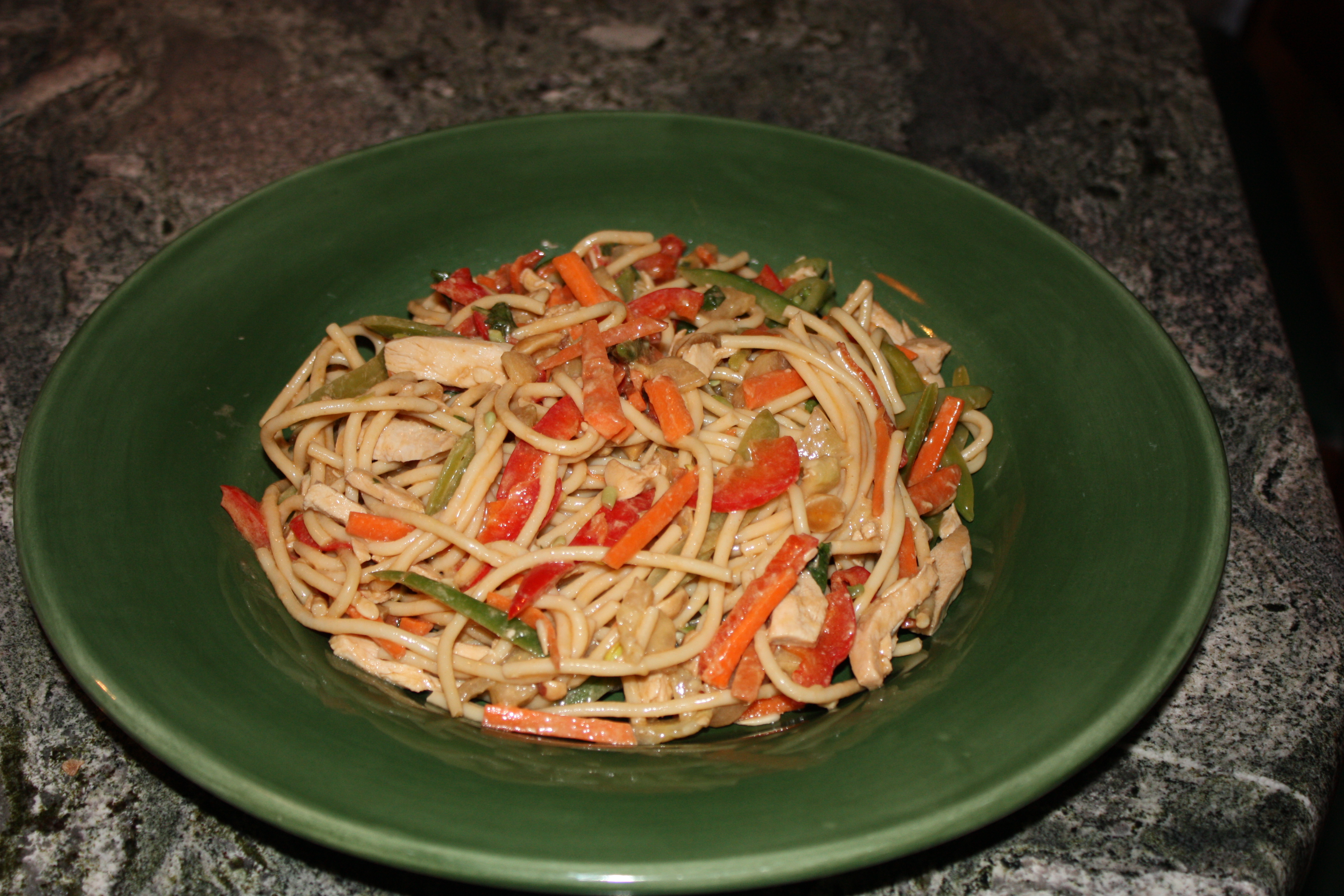
I enjoyed cooking this weekend.  For the first time in a long time.  As a teen, when my disordered eating was at its zenith, I was obsessed with food and cooking and not eating.  I devoured Gourmet magazine and spent hours in the kitchen teaching myself to cook and concocting elaborate meals, which I did not enjoy eating.  In my 20’s, cooking became more social – a way to entertain with friends.  In my 30’s, part of my courtship with my husband was to cook together and try new recipes.  Truly fun.  And then the kids came.  I practiced survival cooking:  What can I cook when I get home from work that a majority of people in the family will eat that will not take too much time?  That was my criteria.  As a family, we have developed quite a repertoire of recipes, but it can get repetitive.  A luncheon visit from my cousin’s daughter prompted K to suggest Cold Sesame Noodles and inspired me to tackle it.

First, I remembered I’s delicious rendition and looked at about 10 recipes on Epicurious to try to find it.  None of them were exactly as I remembered from her version and none were exactly what I was envisioning.  So, using 2-3 recipes as a general guideline, and my memory of I’s version, I developed my own. 

I started chopping the vegetables first thing Saturday morning.  This took me 30 minutes.  I do not have particularly good knife skills, as T points out regularly.  As I was cursing the tediousness, I decided to stop, take a breath, and change my thought pattern.  This is going to be delicious.  Carefully chopping the vegetables that I have chosen to be in this dish is part of what is going to make it delicious.  I had nothing else I had to do for 30 minutes, so I decided to just enjoy the chopping.  Chopping Meditation. 

Then I put together the dressing in a loose way.  Oh, it’s too thin, add peanut butter.   I forgot ginger – better add ginger!  I mixed the vegetables and the dressing together and then went to assist C in teaching her yoga class. 

When I got home, K had arrived and the socializing had begun.  Everything was ready except for the pasta, so I boiled the noodles and mixed it all together.  I had decided not to agonize over the pros and cons of regular noodles vs healthier whole wheat noodles.  Regular it was.  The texture really is better, sigh.  Everyone ooh’ed and ah’ed, which admittedly is a big reason why cooking is enjoyable.  All in all, it was delicious and beautiful and healthy (in spite of non-whole wheat noodles) and is getting added as a permanent addition to our family food repertoire.

Room Temperature Sesame Noodles

Begin preparation several hours before you want to serve

30 minutes of meditative chopping

30 minutes of other stuff:  boiling water, cooking noodles, setting table, putting it all together

Ingredients

The Stuff

2-3 carrots

1 red bell pepper

1 cucumber

6 oz sugar snap peas

1 or 2 cooked chicken breasts (great way to use leftovers), about ½ lb

½ cup peanuts

½ cup cilantro

The Dressing

½ cup rice vinegar

½ cup olive oil

¼ cup soy sauce

¼ cup peanut butter (smooth, nothing fancy)

1-2 tablespoons toasted sesame oil

1-2 tablespoons Sriracha hot chili sauce

1 tablespoon ginger, chopped fine

Salt to taste

1 lb pasta, cooked to taste, 11-13 minutes usually

(I used Barilla Thick Spaghetti.  Soba noodles or whole wheat noodles would add more fiber.  And, frankly, this is a good recipe for using whole wheat pasta because it is so flavorful!)

Process

  • Chop all the stuff ingredients into same size pieces – matchstick shape and size
  • Stir all the dressing ingredients together until the peanut butter dissolves and emulsifies
  • Taste the dressing and decide if you like it or if it needs more salt
  • Mix the stuff and the dressing together
  • Leave it on the kitchen counter and go away for at least 3 hours
  • Cook pasta
  • Stir in the pasta

Serves

4-6   dinner portions

6-8 lunch portions

Good as a leftover for a take-to-work-lunch

P.S. Don’t eat them cold.  The coldness dulls the flavor.  Room temperature is best.

I am Afraid of Vacation

I am afraid I will gain weight. 

I have been lucky enough to take many wonderful and adventurous trips that have involved beautiful places, joyful connections, new pursuits, as well as dangerous risks to me and people I love.  My biggest challenge with vacation is not the risks involved but my neurotic fear that I will gain weight.  At home, I exert extreme control over what I eat, when I eat, how much I eat and how active I am.  I know exactly what I can eat to maintain my weight.  On vacation, I lose that perceived control.  I like active vacations because I know that at least I will be able to work off extra calories from restaurant dinners.  I also prefer to have some access to a kitchen so that I can make my own breakfast or keep healthy snacks on hand.  So, while it is wonderful to have a break from everyday life, I find it very stressful and difficult to fully relax.  So difficult, that I usually lose weight on vacation because I over compensate for my fear of gaining weight.  Over the years, I have learned a lot about what works for me when it comes to eating and vacation.  Some tips:

Do Drink Water.  (Isn’t this the first tip on any wellness list?)  When traveling, your routine is disrupted and it can be easy to become dehydrated, leading to headaches, fatigue, and constipation.  Drinking water will help you feel better, regulating your mood and your appetite.

Don’t drink too much alcohol.  When on vacation, it’s like a party every night and easy to drink too much alcohol.  Alcohol lowers your resistance to temptation and increases the likelihood that you will overeat.  Alcohol disrupts your sleep and impacts your energy level.  You will sleep better and be more active if you don’t drink too much.

Do eat.  Eat consistently.  Try to eat as normally as possible.  Keep a few snacks handy.  My favorites include yogurt, almonds, and dried fruit.  Keeping hunger at bay will help prevent overeating at restaurants.

Do enjoy what you eat.  I struggle with allowing myself treats.  At the breakfast diner, I choose oatmeal.  At the lunch café, I choose grilled chicken.  At the dinner restaurant, I choose grilled fish and only one glass of wine.  When everyone happily decides to go for ice cream, I am not happy.  I don’t like ice cream.  I am embarrassed that I can’t join in the fun.  And who doesn’t like ice cream?  What kind of weirdo am I?  The flavor is not intense enough.  The fat content makes my stomach gurgle unhappily for hours.  (A bit lactose intolerant? or years with a difficult father who inflicted portioned amounts of ice cream regularly?)  I tried tried tried to relax and enjoy ice cream on my recent vacation.  I did not succeed.  The Swiss Chocolate at Spinnaker’s in Jamestown, RI was a big disappointment.  Bland and uninspiring.  But I ate all of it.  Unhappily.  When we went to Ben and Jerry’s in Newport another night, I relied on my go-to healthier option.  I had a sugar cone with a small scoop of mango sorbet.  Under 250 calories and fat free.  I was so much happier with this, but really didn’t need it.  Perhaps I need to eat ice cream with Alan Richman.

Don’t finish it. The first bite is the most delicious one.  Like money, a certain quantity of food is essential for survival.  But more money does not yield more happiness.  Similarly, more food does not mean more happiness.  Indeed, when we overeat, we tend to feel bad physically and emotionally.  After satisfying our need for survival and our desire for deliciousness, the enjoyment of food tapers off.  Notice that the first bite is where the anticipation and flavor is.  And how much more delicious it is when you are hungry.  Enjoy that first bite fully!  Then, notice how quickly you adapt to the taste.  Once your hunger is sated, you are simply ingesting calories.  Notice when you stop being hungry and when the delight of the taste fades.  It is time to stop eating.  Plus, you will be left with a feeling of virtuousness for not overeating!

Do pretend.  Pretend to be an active, cheerful, energetic person, game for anything – even if you are not.  (I am not.)  You will be more active.  You will meet more people.  You will have more fun.  Being active and trying new things will distract you from thinking about food and eating too much.  After all, what better time than on vacation to try a new way of being?

My Chocolate Stash


A Secret Pleasure

I eat it alone.  Secretively.  I take a bar of dark chocolate and examine the calories and the size of the bar.  I calculate how many 100-ish calorie portions I can divide the bar into.  I break the bar into that many pieces.  I keep one piece out to eat and carefully wrap the remaining pieces up to save for another day.  I need to put them away right away so I am not tempted to eat more than my 100-calorie portion.  I sit and enjoy my chocolate, illicitly, placing a small amount on my tongue and letting it warm up in my mouth so I get the full intensity and complexity of the flavor.  Sometimes I forget to pay attention to the taste and mindlessly pop the chocolate into my mouth.  I am very disappointed when the chocolate is gone and I realize that I didn’t savor the moment.  I feel gypped and want to eat more later.

Very dark chocolate is my favorite.  I go as high as 85% and like the bitterness but I find the flavor is more delicious and mellow in the 70%-75% range.  I don’t really like a lot of add-ins or flavorings, though coffee is a nice touch.   My current favorite is Chocolate Santander, 70%, with coffee bits.  It is not bitter or stale or hard or too thick.  The texture is smooth and it truly melts in your mouth.   

Why am I alone when I eat chocolate?  I am embarrassed to enjoy food in such a sensual way.  Good girls don’t enjoy.  I am embarrassed at my need to control the quantity and the experience.  My weirdness will be discovered.  And besides, if I am not alone, I am expected to share!  Sharing messes up my schedule of allowable chocolate portions.  But, as my husband pointed out – he teasingly outed me and my chocolate stash long ago – it is more fun to share.  Truly it is.  And he still loves me in spite of my weirdness.  Now, I just buy more chocolate and share it as much as I can.  After I measure out my portion…

Dark Chocolate and Weight

I know it is not news that dark chocolate is good for you, but it can help you control your weight.  For me, reserving and looking forward to a treat of dark chocolate every day functions as a signal.  The meal is over – time to stop eating the meal because it’s time for my chocolate!  And it keeps me from eating other types of desserts that have more calories and are not as healthy.  The intensity and the complexity of the flavor are deeply satisfying.  If you focus on the experience, you don’t need a lot.   

My Vacation Fix 

On vacation last week, I got my fix of dark chocolate at a boutique in Newport, RI, Destination Chocolate.  After placing each individual beautiful truffle on delicate china saucers (I chose the 75% pure dark chocolate), Carl coached us on how to optimize our chocolate tasting adventure.  TWO BITES!  Take one bite and place it on your tongue.  Notice the flavor.  As it melts, press your tongue to the roof of your mouth.  Fully finish the first bite before taking the second bite.   After that, it’s up to you to enjoy!

Eat Here Now

Pause

To be mindful means to act with intention.  To eat mindfully means to eat with intention.  Every time you eat, pause a moment.  Even close your eyes.  What is your body feeling right now?  Name what you feel.  Acknowledge what you feel without judgment and take it in.  What are you feeling emotionally, right now?  Name your emotion.  Acknowledge your emotion without judgment and take it in.  Notice your breath.   Breathe.  Ask yourself:

  • Am I hungry? 
  • What does my body want to eat?
  • What does my body need to eat?

There are many answers to the question, Why am I eating right now?   Be aware of your reasons for eating.  Some of the reasons I eat are:

  • Habit – I always eat at this time. 
  • Fuel – I am rushing to work, tennis, yoga, and need to eat something quick.
  • Family – My family is eating a meal together. 
  • Desire – I opened the refrigerator and the grapes looked cold and sweet.
  • Responsibility – No one else is going to eat it.  So I better eat it instead of throwing it away.
  • Chore – I am doing the dishes and my son left a big piece of gooey lasagna on his plate.
  • Love – My daughter cooked it for me. 
  • Social Obligation – There is a birthday party in the office and I am expected to eat cake even though I don’t like stale flavorless store-bought cake.
  • Temptation – The fresh homemade moist delicious cake is sitting on the counter with 1/3 of it left.  I will just take another sliver.  And another.  And another.
  • Emptiness – It distracts me from sadness, doing something I am avoiding, loneliness.
  • Health – It makes me feel like I am doing something productive.  And healthy!
  • Hunger – I am hungry.

Make a decision about what to eat.

Establish a place to eat.  Set your place.  At a table.  Eliminate distractions.  Don’t read.  Don’t eat at your desk, working.   I know.  You don’t have time.  Neither do I – I eat at my desk most days.  But let’s try to do it differently today.  You and your nourishment deserve your time and your attention.  Plus, you will feel more satisfied and eat less food if you pay attention and honor your self and your meal. 

When you eat, eat slowly.  Look at the food.  Smell the food.  Taste the food.  Chew the food.  Swallow the food.  If you allot yourself a healthy amount of calories every day, then your food intake is limited.  Enjoy it.  Pause and ask yourself how your body feels.  Are you still hungry?  Does the food taste good?  If the answer is no, stop.  If the answer is yes, continue. 

When you are finished, end the meal.  Clean your place.  Establish your next activity.  Closure will create boundaries around meals, eliminating mindless eating and snacking and allow you to move your focus onto something else other than food.

I remember loving to eat orange slices as a child.  I would stick them in my mouth making a funny orange grin with the peel.  Then I would bite into the space between the peel and the fruit, the juice squirting into my mouth.  I am reminded of this delight when I read Thich Nhat Hanh’s essay on eating a tangerine mindfully [Thich Nhat Hanh, The Miracle of Mindfulness, Eating a Tangerine (p5)].  He cautions how easy it is to pop section after section into our mouth without tasting the fruit or finishing each bite.  Eat each section before taking the next section. 

Try eating a piece of fruit with your full attention and notice how delicious it is.