I Hide My Chocolate

Midlife observations

Sex and the Dorm Room
012214_assault_report

Sometimes Yes Means No

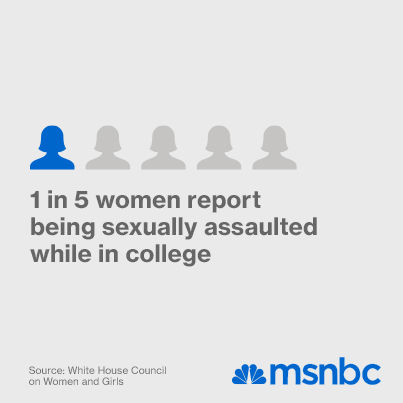
Buried on p.18 of the New York Times about two weeks ago was “Obama Seeks to Raise Awareness of Rape on Campus.”  President Obama is creating a task force charged with, among other things, recommending best practices for colleges to prevent and respond to assaults on campuses.  Rape is most common on college campuses and several deplorable statistics were cited in the article.  20% of college students (primarily women) have been assaulted, but only 12% of those students actually report the assault.  In one study, 7% of male students admitted to committing or attempting rape and 66% of those students said they had done so multiple times. 

I am terrified of violent rape by a stranger, as most women are.  It informs how I deal with strangers.  No eye contact.  Walk swiftly and confidently.  Pair up with someone for safety.  As I’ve become older, my concern is less for myself and more for my daughter.  Perhaps of more concern however, is how to talk to her and help her prepare for the variety of more nuanced sexual overtures she is bound to receive.  I have been thinking a lot about sex on college campuses, as I prepare to send her to college this fall and wonder how to talk to her about it in a loving and supportive way.  It’s not an easy conversation to have.  My mother certainly didn’t have it with me.  I found out about sex from boys who wanted to have sex with me.  Talk about a conflict of interest. 

While rape and sexual assault are of obvious concern, it is crucial that we teach our sons and daughters about navigating the murkier areas of sexual exploration and identifying some guidelines for consensual sex and nonconsensual sex.  Yale published a document at the beginning of the 2013/14 academic year tackling the question of sexual misconduct and presenting a variety of grayer scenarios and how the university would rule on whether or not the situation was consensual.  The goal is worthy but the tone was clinical and Gawker mocked the androgynous fictitious characters.  Perhaps Freshman Orientation should include small group discussions facilitated by trained upperclassmen that would role-play various scenarios, teaching men to be respectful and teaching women to trust their instincts and teaching both to not be afraid to slow the process down.  And to be aware of the disinhibiting effects of drinking alcohol.  Consider this familiar scenario:

Young woman goes to party and flirts with young man she finds handsome.  She is attracted to him.  She wants to please him.  After all, she has been brought up to be compliant and accommodating.  She wants him to like her and only her.  She is aroused and wants a physical encounter.  As well as a lasting relationship.  Young man wants to prove he is a player.  He gets off on the sexual conquest, adding another encounter to his tally.  The more sexual encounters he has the more likely he is to be considered popular and desirable.  The more sexual encounters she has the more likely she is to be disdained as a slut.  Not to mention she bears the risk of getting pregnant.  Or an STD.  It is in his best interest to get her to have sex with him.  As curious as she is, sex is a much more mixed bag for the woman.  Back in the dorm room with him, she may have second thoughts.  No, I just want to kiss, she says, I am not ready for sex.  Oh come on, he says, you led me on!  She reluctantly acquiesces.  After all, everyone else is doing it.  Maybe she enjoys it, maybe not.  Either way, she feels out of sorts about the encounter.  The boy gets his win.  It’s over.  Is that consensual?  No, it’s not.  But it happens.  All.  The.  Time.

It seems there is increasing pressure on girls (and boys) to go along and hook up casually, as if sex were just a physical need that must be met regularly with no emotional consequences.  Consensual sex has gotten more complicated.  Oh yeah, she pretends, I’m cool with sex and hooking up and comfortable with lots of experiences with different guys, with different girls, and all types of sex acts.  Huh?  Sexual contact is intimate and results in a range of emotional reactions.  Young women may be propositioned by other women as well, which can be confusing.  Is it trendy?  Is it taboo?  Female sexuality is more fluid and women form deep and intimate bonds with their friends which may lead to sexual intimacy.  But women should be encouraged to say no to other women as well as to men, if she doesn’t want to go down that path. 

Mother to daughter to granddaughter, it takes generations to change women’s attitudes and behavior toward men, sex, and intimacy.  My mother, whose second husband was abusive, imparted to me through non-communication that sex is better left undiscussed and to be wary of men.  The residue of her experience and its impact on her impacted me.  The essence of her being is at the core of my being which is at the core of my daughter’s being.  

Call me a prude (because I am), but casual hook-ups are not what I want for my daughter.   Nor do I want her to be afraid of physical intimacy.  Here’s what I want for my daughter as she becomes a woman and learns the difference between sex and making love.

Feel beautiful.  Because you are beautiful.

Enjoy your body.  Be comfortable with your naked body.

Have fun exploring your sexuality.  Unafraid, but safely.

Know that it is okay to wait until you are older.  Even if everyone else is doing it.  The older you are, the more self-awareness you will have and the more likely you are to have an emotionally mature experience with your partner.

I hope you will move slowly when you explore your sexuality with another person.  Get a sense of them as a respectful person who will appreciate you, body and soul.

I hope you have a number of fun and joyful sexual experiences that leave you confident and feeling loved.

I hope you have as few experiences as possible that leave you feeling bewildered, hurt, abandoned, violated, ashamed.

Remember that men may approach sex differently than you and that it may not serve you well to acquiesce.

You can say no.

You can ask for help.

You can talk to me.  There is absolutely nothing you can say to me that would surprise me.  I went to college.

You don’t have to talk to me.  Thank goodness for aunts and cousins and wise friends who love you.

I love you.

Don’t Know Much About Football Games

30zSUPERSTYLE-superJumbo

But I Like the Costumes

I am not a big fan of football.  I follow the news about traumatic brain injuries in football more than I keep up with who’s winning.  I was transfixed by the Penn State scandal about sexual assault and the cover up by university officials.  I am currently somewhat amused and dismayed by the latest UNC Chapel Hill scandal about bogus classes for the athletes where they all get “A’s” for not attending class.  To me, football is a violent game played by adrenaline and testosterone amped up “thugs” – to quote (or misquote) the highly charged word of the week.

My father would watch football every Sunday, a Redskins fan.  My mother did not.  Condescending of sports and stereotypically male activities, I absorbed her scorn, rolling my eyes at the ridiculous obsession of sports fanatics.  I never quite understood my father’s fascination.  After all, he was a violin-playing, slender and awkward physicist who had an equivalently condescending attitude toward popular entertainment and anything trendy.  But his father was a strapping man who did play football.  What an enigma his son must have been to him!  Sometimes, I would join my father and he would patiently explain the rules of football to me.  I absorbed his respect for the game.  The sound of whistle-blowing referees and cheering fans on the television on Sundays has become nostalgic for me.

In high school, our football team was noteworthy for not winning (though the players and the cheerleaders were at the top of the social hierarchy.)  When I went to the home games, it was purely social – to hang out with my friends, to enjoy chanting in the stands, and to support the marching band.  I don’t remember actually watching the games.  Football also was not part of my college experience, attending an all-women’s college.  I never dated someone who was a football fan, so it has always remained on the periphery of my life.  I’ve spent many a Super Bowl Sunday at the movies or knitting with girlfriends, alternating between grudging tolerance of the spectacle and hostile avoidance. 

Several years ago, my kids began clamoring to watch the Super Bowl.  What?!  Where did I go wrong?  I decided to humor them.  Why should they be saddled with my baggage?  Why should they belong to the weird family that shuns the Super Bowl?  Besides the commercials are funny and the half-time show is a spectacle in and of itself.  The Giants, our home team, were in it.  I actually watched the game.  I became interested in the strategy.  And awestruck by Eli Manning’s amazing pass and David Tyree’s amazing catch in the 2007 game.  The grace and choreography won me over. 

Now that sports journalism has broadened to include more player profiles, I can’t get enough of Super Bowl week.  This year, I’ve read up on the Nike-designed costumes.  Oops, I mean uniforms.  (I prefer the Sea Hawks blue and lime green costumes over the obnoxious orange of the Broncos.  Is that a good reason to root for the Sea Hawks?)  I’ve read up on Richard Sherman and his college career at Stanford.  Apparently, he is NOT a thug and appears to be more complicated than that incident makes him out to be.  I’ve read up on Russell Wilson and his multi-talented foray into baseball.  I am sympathetic with the aging Peyton Manning and would love to see the wisdom of experience beat out the brashness of youth.  (Is that a good reason to root for the Broncos?)  My favorite piece was on the Bronco’s offensive coach, Adam Gase, a brilliant and analytical non-player who is a creative play-maker and has established an astonishing synchronicity with Peyton Manning. 

Mainly though, I am happy to be able to have fun participating in a popular culture event with my family and without all the scornful judgment of my upbringing coloring the experience.  Go Sea Hawks!  I love your costumes.

Oh, and note to NFL:  Please address the mounting evidence of traumatic brain injury from football.

Photo credit:  New York Times

Shredding 26 Pounds

IMG_1677

Shedding the Past, Making Room for the Future

I just got rid of 26 pounds of documents that have been moldering in our basement.  Twenty-six pounds of old bills, tax returns, bank statements, insurance EOB’s, and god knows what else.  My husband, (I am sure rightly so), bought a shredder years ago to dispose of confidential documents and to protect against identity theft.  Our organizational system is to take documents that seem vaguely important to a milk crate in the basement that sits by the shredder.  Don’t ask me why the basement is the proper place for this questionable organizational strategy.  I can’t say that it works very well, because the pile just gets bigger and bigger and nothing actually gets shredded.  One year, probably 8 years ago and the last time anything was shredded, we convinced my son who would have been 6 or 7 at the time that it would be FUN to shred documents.  That lasted about an hour, maybe two, and produced anxiety that he would shred a finger by mistake.  It was not really worth it and we were never again able to persuade him that shredding was fun.  Even a six year old learns quickly that you have to unfold everything, remove the staples, and that forcing more than 3 pages jams the damn thing.  I went to Staples where they have a seemingly secure shredding system.  (Note to Staples:  The salespeople were not particularly friendly nor helpful, probably because they’re not trained well and not paid well – and I don’t understand why Godiva is sold at Staples.  Seems off brand to me.)  

I feel 26 pounds freer.

I don’t have a good filing system.  In addition to the pile of important and confidential documents dessicating in the milk crate in the basement, I have two piles in the front hall requiring immediate attention, piles of bills to be paid, recipes I want to cook, yoga lesson plans for my Thursday night class, newspapers and magazines with articles I am dying to read, but probably won’t before I give up and toss them into the pile of recycling.  Another two piles are hidden inside the beautiful chest in our front hall that my husband thought might inspire us to organize some of our clutter in.  Another six or seven (or twelve) piles surround the floor in our office/guest room that is now so cluttered that it cannot be used for either purpose.  A poor guest would be buried by the pile of clothes-to-be-donated that are sitting in purgatory on the futon bed.  The problem with this organizational strategy is that when I actually need to find something, like the yearbook order form for my daughter’s 12th grade yearbook (important!!!) or some obscure document for the annual tax filing ordeal (coming up!!!), it takes me hours of hunting through the various piles to find what I am looking for.  Or worse, my husband decides he needs something that has ended up in one of these piles and curses disbelievingly at how disorganized we are.  Yeah, like it’s a surprise.  We’ve been disorganized together for 20 years now. 

Neither one of us likes to spend time on organizing.  Somehow our lack of organization is always the other’s fault.  He keeps stuff because We-Might-Need-It-Someday or It-Still-Works.  I am more willing to throw things away, but I don’t because it takes time and decision-making and I have better things to do (like Achieve Greatness).  I am paralyzed by filing, unable to decide what categories to create.  The daughter of a hoarder and organizer-by-piling, I never learned any other way.  My father’s office was off limits because well, I am not sure why.  Forbidden because he didn’t want us to see what was there or forbidden simply because he wanted to control that space?  Under no uncertain terms was anyone allowed in that room.  It was a mess.  Piles of stuff that he wanted no one touching.  During a recent visit, there were 7 empty mouthwash bottles in the bathroom.  I know he had a good plan for using these bottles, but it was bordering on pathological (and laughable if it weren’t so sad).  He has hired a de-clutterer to help him.  I have suggested therapy, but I think it is too late.  He is increasingly overwhelmed with all his important-to-him make-work paper-work.

Perhaps his plight is behind my somewhat sudden and intense desire to free myself of clutter and attempt to become more organized.  I am terrified of ending up like him, obsessively and compulsively spending time on stuff that is not very important or not very effective, while ignoring housekeeping tasks or undervaluing the impact of a streamlined living environment.  I have always been drawn to modern simple de-cluttered spaces depicted so beautifully in home magazines, so foreign to how I live, begging the obvious question:  Where do they keep their stuff?  Sure, there is a lot of stuff when you are an active family of four, but couldn’t we do with less stuff?  Isn’t it time to shed what we don’t need? Especially as my daughter prepares to leave for college and we become a household of three.  Do we really need the toy room?  Perhaps it is time to shed what no longer serves me.

Creeping up on me quietly has been a desire for a serene room in which to write.  The beauty of the laptop is that I can write anywhere.  I usually write in the heart of the house where all the activity is, in the kitchen/family room area.  The parakeets are chirping and hopping on the keyboard, the tv is on, the kids ask for homework help, my husband practices guitar.  It is NOISY.  But I am not home very much so I like being accessible and I like being with my family.  Usually, I can focus and write amidst the activity.  But sometimes, like when I am working out a theme that might require some brave exposure and I want to do it respectfully, I need some peace and quiet.  Just what an office might provide.  Oh yeah! I have an office!  It just happens to be a junk room.  Some people have junk drawers, we have a junk room.  I quietly and gradually have decided that I need that space to be peaceful, clean, organized, and quiet.  I need to get rid of the junk, the clutter.  It’s a daunting task, that I expect will take me the year.  Or more.  But, gradually, I hope to shed the old stuff I don’t need, streamline the stuff I want to keep, and create an open and inviting haven where I feel calm and focused.  Who knows, maybe it will even become a space where guests feel welcome.

It’s A Good Thing?

dreamstime_m_23549101

The Masks We Wear

Martha Stewart is an easy target.  She seems to have no idea how ridiculous she comes across in her ivory tower of affluence, kind of like Effie Trinket from the Capitol in The Hunger Games.  I haven’t paid close attention to Martha since she was convicted of lying in 2004.  I’ve been aware that she has managed to have continued and impressive business and media success post-jail-time.  I certainly believe in redemption and that people should be allowed second (and maybe even third) chances.  Whether Martha has redeemed herself is debatable.  Truly I don’t know her, other than the masked persona she presents to the public.  I should not pass judgment.

I did admire Martha during her heyday in the 90’s.  Her approach to keeping a beautiful home and her emphasis on the importance of gracious entertaining was completely foreign to me and my upbringing where it was a miracle that Chicken and Potatoes (or some variation thereof) appeared at the kitchen counter for dinner every evening from 6:30-6:40 pm with two introverted working scientist parents who were clueless about how to host a party and so they didn’t.  I wanted to cook delicious food, have friends over for elegant dinner parties, and fantasized about being as organized as Martha.  Her calendar, published every month in her magazine, amazed me.  She was the tastemaker of the day (and an extraordinary business woman).  When I got engaged, I begged my mother for her book, Weddings, to inspire my planning.  My mother scoffed, as she scoffed at my desire for a wedding dress, but I wanted my one and only big party of my then-young life to be happy, tasteful, beautiful, and I did not trust myself to plan it without Martha’s guiding aesthetic. 

Since then, my values have shifted and my Martha aspirations have faded, betrayed by her jail stint.  So, it was with mild curiosity that an article in Thursday’s NYT caught my eye.  (The print edition, of course.  Where else would you have the joy of discovering and reading about topics that you might not see otherwise?)  The article profiled Martha describing her beauty routine.  Wow.  The serums and potions, the variety of high end products used, in conjunction with daily, weekly, monthly sessions with a retinue of beauty service providers, like her facialist.  There was not a speck of humility or irony in this article.  No acknowledgement that she is incredibly lucky to have the time and money to live such a luxurious lifestyle and that most of us could never afford the products and services she uses.  And perhaps most of us would not choose to spend our money and time this way even if we could.  Though, wouldn’t it be nice to have the opportunity?

As I quickly jumped to judging Martha scornfully as ridiculous and irrelevant, I paused and backed up, asking why is the New York Times featuring this article anyway?  They must think there is an audience of women readers who will want to know what are the best skincare and beauty products we should all be using, according to Martha?  (Note to the New York Times, if you are interested in providing truly useful beauty service journalism, then a summary of the products mentioned would have been helpful.)  If Martha gets up hours before she needs to leave the house in order to slather creams on her face and body, should we all be doing that?   Just because my beauty regime consists of a shower and an occasional swipe of lipstick doesn’t mean all women are minimalists.  And maybe my ascetic and controlling minimalism is the flip side of the same coin.

Now, I am the first to acknowledge that appearances matter.  Plenty of studies have shown that attractive people are judged to be more competent and are more successful in life.  I’ve spent many days in my younger years panicking that I didn’t look “right.”  At this stage, I am a bit defiant about freeing myself from the constraints of time-consuming and money-consuming beauty regimes.  I would rather spend my money on healthy food, yoga and vacations with my family.  The article did make me wonder about the New York City audience that the NYT serves (myself included).  We take great pains to care about those less fortunate while we are thoroughly caught up in the striving, the effortful and materialistic striving to be on top.  Like Panem’s Capitol we are curiously bubbled, out of step with how the rest of the world lives.  Isn’t this the same newspaper that featured the plight of homeless children in a bid for reader attention and sympathy?  And now we are slavishly looking to Martha for beauty regimen how-tos?  Does the left hand know what the right hand is doing?

Women and society need to have the confidence that beauty comes from within and from how you behave.  It is more important to figure out how to look and feel your best so that you can be your best self and contribute the best of yourself to your world without getting caught up in being beholden to a public persona, a mask, that requires so much upkeep.   Imagine how much good we could do if we devoted the money and time we spend on beauty products and our effortful and materialistic striving to helping someone else, to making a meaningful and productive contribution to our community?

Choosing Laughter

IMGP0387

Choosing to be Happy

I embrace the austere clarity and hope that is January.  I long ago gave up impossible-to-achieve, all-or-nothing New Year’s resolutions (Stop picking cuticles!  Ashtanga every day!  No meat!  and my annual favorite:  Stop procrastinating!)  in favor of gentler incremental changes working towards unmasking my true self and living authentically.  My disciplined, achievement-oriented self finds it impossible to refrain from setting goals.  Indeed, goals and dreams are valuable for staying focused on what matters to you and not getting side-tracked by what matters to someone else.  As I reflected on last year’s goals and my genuine progress towards realizing them, I deliberated on where to focus my heart this year.  Last year’s list still resonates – how shall I deepen it?  After trying on several goals, I settled on one guiding intention for my year:  choose laughter.

At first, it was “laugh more.”  But this seemed vague and not really representative of my intention, and so I added the word “choose.”  To choose to laugh means to pause before reacting in order to decide to respond with thought and purpose.  It is a habit for me to complain, to worry, to be tired, to feel overwhelmed and anxious.  The mind can choose to be happy.  Can I break out of my old patterns and choose to laugh and be happy?

When heavy snow arrives, preventing my obligatory on-site presence in the office, can I choose to be grateful for the day at home with my family instead of worrying that I “should” be in the office?  My children are thrilled with the surprise of nature and laugh joyfully.  How can I learn from them?

When a colleague shows up at my office door, can I choose to smile at them welcomingly instead of scowling at them with how busy I am? 

When it’s time to undecorate from Christmas, can I choose to reflect on what a warm and relaxing holiday it was instead of feeling burdened by the work of cleaning up and depressed about the work of returning to work?

When several newbie yoga students show up to class in January, as part of their new year’s resolutions, can I make them feel comfortable instead of worrying about whether I can modify my class properly for a larger group?

When my children suggest an activity, can I say “Yes!” instead of “Not now, I need to do the laundry.”

My inclination toward laughter and delight has been suppressed all my life.  By a mother who hovered and worried, pegging me as sensitive and shy.  By a father who judged and withheld love and praise in favor of intellect and duty.  Resulting in an anxious perfectionist who chose solitary achievement over social laughter.

No more.

Choosing laughter means changing habitual behavior that no longer serves me.  Choosing to embrace what is and not wishing for it to be different.  Choosing a lighter response over a darker heavier, more judgmental emotion.  Choosing to be social.  After all, you need other people to really laugh out loud. 

My family has rallied behind this “resolution” with great zeal.  We’ve decided to have family joke night at our family dinner on Sundays where each person tells a joke.  I love this because I realize that women historically have not been encouraged to be joke-tellers resulting in the stereotype of the woman who can’t remember the punchline or tell a joke well.  I will pick one joke a week that makes me laugh out loud (no judgment!) and share it with my family (and tweet it that evening).

When my daughter cracks up uncontrollably, she closes her eyes and is overcome with the funniness.  She’s been sharing this side of herself more and nothing makes me happier than seeing her laugh.  Perhaps if I laugh more, she will too.

Ten Books and One Musical

220px-ND1tsotoc

A List

Recently, one of my oldest childhood friends invited me and others from his Facebook community to share the ten books that have touched them over the course of their lives.  Ah, this is perfect for me!  I was an English major, I read a lot, and I love reflecting on what has affected me (and why) as well as what has affected others (and why).  There was just one problem.  I panicked at the instructions:  Don’t think!  (Really?  Don’t think? Impossible!) List 10 books that have impacted you.  Share your list and tag 10 friends to share theirs.

My reaction went something like this:

I can’t remember anything I’ve read except for Little Women and Nancy Drew.  Why can’t I remember anything I’ve read?  How do they remember what we read in high school?  I have no memory of those books.  My list is not nearly as interesting as their list.  There are only women authors on my list.  Aren’t there any books by men that I remember reading that had an impact on me?  Maybe I should Google lists of “important” books and pick some from there.  Share with others?  So revealing and embarrassing.  To hell with this, I am not participating.  Cue:  stomp off and hide.

It’s kind of like when a new friend or colleague asks you what your favorite movie is and the only thing you can come up with is a completely childish and uncool answer, like The Sound of Music (the original version with Julie Andrews).  I have actually burned answers to some of these generic ice-breaker questions into my brain so that I am no longer caught off guard.  I now answer the movie question with more recent movies that reflect more of who I am now and are more socially sophisticated (Wall-E, The King’s Speech and Gravity…oh and dare I admit it, Star Trek:  Into Darkness).

Why is it that all the books that come to mind are from my childhood?  It makes sense that we choose books, movies, and heroines from our childhood.  This is when a book we read really could and did affect the direction we pursued. 

The more troubling question that I kept pondering was why can’t I remember more?  Every explanation comes back to trauma and anxiety and the role it has played as an undercurrent in my life. 

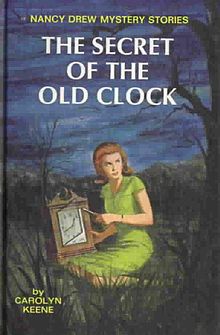
I read voraciously as a child.  Especially in Summer when I was considered too shy and sensitive to go to camp.  Instead, I stayed home and read.  Not just The Secret of the Old Clock, but every single Nancy Drew mystery.  Not just Little Women, but every single book by Louisa May Alcott.  It was my escape and a way of learning about others.  Girls who took risks and survived adventures were my favorite (and still are).

I remember that at my loneliest, most anxious time in my teens and early 20’s, at the height of my disordered eating, I would eat alone and read while I ate.  One bite per paragraph.  That way the meal would last a long time and I wouldn’t have to face my lonely anxiety nor my gluttonous desire to fill the emptiness with food.  It is impossible to remember what you read if you are focused on what you are eating. 

Another important part of remembering is to document your thoughts, your stories, either by writing them down or saying them aloud, perhaps multiple times.   When anxiety felled me, I hid away.  Not participating in the world, choosing instead to live in my head.  I would say what I thought I should say, but not always what I really thought.  What’s the right answer that will get me the A?  It is impossible to remember what you read if you are focused on pleasing the teacher…or some other dominant authority figure.

I was always embarrassed about revealing what I was reading.  It was not cool.  It was not sophisticated.  Or maybe it was too sophisticated.  (Who reads all of Jane Austen at 16?  That’s just weird.)  It is impossible to remember what you read if you are focused on hiding it and not sharing what you are reading and what you think about it with anyone. 

I see this with my mother.  After multiple operations over the last 25 years to remove a benign but persistent growth on her vocal chords, she has nearly lost her voice.  Indeed, metaphorically, she has lost her voice.  Unable to speak, she no longer remembers her stories, the stories of her life.  The stories in the books she reads to pass the time.  I am convinced that she does not have dementia.  She simply does not use her memory muscles because she does not speak.  She cannot speak her truth.  Andperhaps we don’t listen for it.

Memory is funny, often elusive, and changeable depending on who is remembering, who is telling the story.  The anxious, less confident self may not reveal her memory, her story, her truth.  She may defer to the more confident – or at least the more dominant or authoritative person who does speak.  For me, it has taken my writing and the increasingly less tentative telling of my stories and the expression of my thoughts to reduce my anxiety and make concrete my memories. 

Of course, perhaps the most helpful tool for finding my voice has been to be less focused on me, less judgmental of me, and more open to others.  Who cares if my list is not “right?”  So, even though I had to dig deep, here is a list (not necessarily THE list – that is too intimidating a requirement) but a list of 10 books that have had an impact on my life.

    1. Winnie-the-Pooh, by A. A. Milne.  My mother read the Pooh books aloud to me many times, inspiring a life-long love of reading and writing and sharing.  I felt very close to her.
    2. Little Women, by Louisa May Alcott.  This book seems so quaint and dated to me now, but I lost myself in it every time I read it.  Jo March showed me that girls could overcome their constraints.
    3. Nancy Drew mysteries (all of them), by “Carolyn Keene.”  Feisty, brave, smart Nancy was my heroine.
    4. The Diary of a Young Girl, by Anne Frank.  This introduction to the Holocaust and evil remains unbelievable and compelling.
    5. Mastering the Art of French Cooking, by Julia Child.  Julia Child inspired me that dinner could be more than eating chicken and potatoes in 10 minutes at the counter.
    6. A Chorus Line, book by James Kirkwood, Jr and Nicholas Dante.  Music by Marvin Hamlisch and Lyrics by Edward Kleban.  A musical, not a book, that moved me profoundly and set my course in the dance direction for better or worse for decades.
    7. The Handmaid’s Tale, by Margaret Atwood.  Transfixing terror.  I couldn’t put it down.  Perhaps the heroine’s name, Of-fred, was part of the fascination.
    8. A Room of One’s Own, by Virginia Woolf.  Still an amazing feminist manifesto.
    9. The House of the Spirits, by Isabel Allende.  Passionate and magical.
    10. Meditations from the Mat, by Rolf Gates.  This book changed my life, expanding my appreciation of yoga and setting me firmly on my yoga journey.
    11. Where’d You Go Bernadette?, by Maria Semple.  The first book of grown-up fiction I’ve read in years with a wonderful plot, heroine, and funny literary devices for telling the story.  It made me wonder where I went.   And to be happy that I’ve found myself.  And interested in fiction again after decades of reading nonfiction and business-oriented books.

What am I reading now?  I just finished Mockingjay, by Suzanne Collins, the third and final installment of The Hunger Games Trilogy.  My daughter turned me on to the series and I found it to be a page-turning suspenseful dystopian story with a strong heroine.  My analytical engineer of a husband gave me a book on Reiki for Christmas.  Hmmm, is this a sign?  This energy stuff has always seemed like a bit of crazy hokum to me, but I am open to exploring it right now.  And impressed with his thoughtful gift-giving.  The other book that is on my nightstand is Wave, by Sonali Deraniyagala – the searing memoir by a woman who lost everyone she loved in the 2004 Tsunami.  Why I would want to read such a painful book?  I am drawn to stories of survival, women’s survival.  These stories remind me of what we are capable of, what matters most.  And, after all, I am a survivor.  We all are.

Dear Santa

IMG_1646

The List

Around about now, my gift-buying panic sets in.  I didn’t buy enough stuff!  I got more fun stuff for my son…my daughter will be disappointed!  I got more expensive stuff for my daughter…my son will be disappointed!  Somehow, in the chaotic peak of the Christmas rush, being judged a good gift-giver is a referendum on my self as a mother.  I didn’t get everything on their list. 

The list.

After Thanksgiving, my kids write to Santa with their list of what they want for Christmas.  My daughter is pretty good at coming up with a quantity and a variety of realistic and shoppable girly items, acceptance into college notwithstanding.  My son has one thing on his list, year after year.  A dog.  (Actually, a dog is on my daughter’s list every year as well, but somehow we have keyed in on the dog being more of my son’s desire.  That is because she, like girls everywhere, is more accommodating and adds other items to the list.  He is single-focused, dare-we-say-it … stubborn.)  He’s resigned himself to the fact that we are not going to get a dog because our lifestyle is not compatible with having a dog.  Besides, he’s grown attached to our dog surrogates:  two beloved parakeets named Cooper and Ginger – both Christmas presents from the last 2 years.   With two birds already and no dog in sight, his realistic and shoppable list is bare bones this year. 

The list ensures that everyone gets stuff that they want and Santa doesn’t waste time and money on stuff that people don’t want.  This is an expedient way of dealing with the chore of gift-giving that I learned from my parents.  New pajamas.  Check.  Esoteric book from the top 10 list.  Check.  God forbid you should deviate from the list.  The gloves need to be black not brown.  The slippers can’t be too firm nor too slippery.  And the hand knit scarf that took weeks to design and create?  Too long.  Too thin.  A strange color.   It’s languishing unused in the back of the shelf in the closet.

Gift-giving was a very transactional process when I was growing up.  There was little room to surprise and delight.  As for Sheldon, in my son’s favorite show The Big Bang Theory, gifts (and friends) are an anxiety-producing obligation.  When Penny tells Sheldon she has a wonderful gift for him, he rushes out and buys a gift basket in every size and value so he can immediately reciprocate with exactly the right basket.  She surprises him with a napkin autographed by his hero, Leonard Nemoy.  Sheldon is so overcome with surprise and delight that, after dumping all the gift baskets on Penny, he realizes that he can’t possibly reciprocate such a meaningful gift and does the unthinkable.  He hugs her. 

The combination of a spiritually bereft upbringing with an obligatory approach to gift-giving has made me approach the holidays quite Scrooge-like.  Don’t give me another chotchke!  When will the parties be over so I can get back to my disciplined routine?  Bring on the new year’s resolutions!   It is with effort that I create a holiday with my family that is more than a realistic and shoppable list.  A holy day that is about love.

This year, I was determined to be joyful.  To look at the work involved with Christmas as a labor of love, not of duty and obligation.  My husband and my children love Christmas.  We’ve worked hard to make it a special and magical time.  We maintained the myth of Santa so well that neither child figured it out until each was 12 and in 6th grade, when my daughter overheard two careless moms discussing it at the bus stop and my son burst into tears when we took him aside and revealed the truth – afraid he was getting to be so old that his peers would make fun of him.  To deal with the end of the Santa era, we spent the following Christmas on a sailboat with almost no vestige of our usual traditions.  It didn’t feel like Christmas.  Last year, I breathed a sigh of relief as the effort to maintain the myth was gone.  But then, my children complained that the appearance of the gifts under the tree was no longer a magical surprise.  They begged us to do it after they were asleep on Christmas Eve.  Even though they’ve been inducted into the secret of Santa, they (and I) want to hang onto childhood secrets just a little bit longer.

So, this year, my daughter’s last Christmas before college, we set up our tree earlier than usual.  I did not complain about schlepping down the ornaments from the attic.  Well, that’s not true.  I did catch myself yelling at my son, as he brought down all the Other decorations from the attic, “Do we really need all that stuff?!” He calmly looked at me and said, “Yeah, Mom, we do.”  He proceeded to decorate the mantle and then put back the boxes.  I breathed and remembered my intention to be joyful and tried not to anticipate the chore of undecorating.

This weekend, I decided to tackle the stores one more time, because even though I got most of the stuff on their list, I did not get enough, equating quantity of gifts with quantity of love, never a successful equation.  I found myself braving the traffic, the parking lot, the lines, the people.  I went over the lists one more time.  And then, I stopped.  What can I give them that will be a delightful surprise?  What can I give them that will show them that I have listened to them?  That I care about making them happy?  That I love them?  Instead of diligently crossing items off the lists, I opened my eyes and found a few funny and sweet things that are not on their list.  Nothing big.  Nothing expensive.  Just something that I know they will appreciate.  After all, isn’t that what Christmas is all about?  Finding light in the darkness, giving love to family and friends.  Creating traditions.  Sharing celebrations.  Honoring what is magical.  Even, perhaps, awesome.

I am going to set my alarm for 3 am, my usual pee-in-the-middle-of-the-night time, and sneak downstairs.  Stealthily filling the stockings and placing the gifts under the tree.  I’ll move the fireplace screen, to look like Santa’s been there.  I’ll make sure we leave Santa some incredible bitterdark chocolate as a special 3 am treat for myself.  I’ll sit and gaze at our beautiful tree that we decorated, together, with love.  I’ll sneak back into bed for a nap before magical, awesome Christmas morning.

Merry Christmas.

Cartwheels

handstands-6547863handstands-6547863handstands-6547863

I Am Not Playful!  (But, If It’s Not Too Late, Could I Be?)

On our morning rush to the train station, we drove by a neighbor whose 8-year-old daughter was waiting for her school bus and happened to do an amazingly perfect cartwheel just as we passed by.  “Ah,” I smiled.  “I remember when I was good at doing cartwheels!”  Pause.  “Who am I kidding?  I was never good at cartwheels!”  We laughed.  The daughter of unathletic scientists, I grew up as a bookworm – usually one of the last to be picked for a softball team.  After all, I throw like a girl.  Any athletic ability I have has been hard-won as an adult.

I remember wanting to be good at cartwheels.  Every year we would get to the gymnastics part of the P.E. curriculum and I would be in awe of (and jealous of) the girls who seemed to effortlessly fly through the air.  These girls were pretty and social with each other, banding together with seeming ease and confidence.  I was not one of the popular, pretty, confident girls.  (Though I pretended to be one when I was a older.)  When I was 8, practicing cartwheels in my front yard, I was a watchful and lonely only child who was afraid of going upside down in a cartwheel or a handstand.  Practicing over and over again for that fleeting blissful moment when I felt a hint of that thrill when I maybe kind of sort of did it.

I have experienced that thrill in yoga, practicing handstand over and over again, flying upside down – against the wall, of course!  Sometimes there are fleeting blissful moments when I feel perfectly balanced and hover away from the wall.  It’s enough to make me wonder if I could do a cartwheel.  At 51.  Maybe kind of sort of.  Maybe it’s not too late.

Like life, I show up at yoga, bringing every facet of my personality and all my emotions.  Good, bad, embarrassing.  All of it is on my mat.  There is my regular class, where I feel deeply connected to my teacher, am friends with the other students, and feel confident of my abilities as yogini.  I situate myself in the back row with the other regulars, checking in with my friends and even joking around – like high school seniors goofing off in the back of the bus (not that I was ever a back of the bus kind of girl).  Then there is an assortment of classes in Manhattan that I slip into irregularly.  I might know the teacher, but I don’t really know the other students.  I breathe, enjoy the sensation and familiarity of the poses, and the feeling of sneaking some peace in the middle of my work life.  Manhattan has the trendy, competitive thing going on.  Classes can be crowded, the average age is about 30, and everyone knows their way around Surya Namaskar A and B, jumping back to Chaturanga while nonchalantly tossing in a handstand.  I expect the crowded competitiveness in Manhattan and deal with it by ignoring it.  Aggressively.  Refusing.  To Participate.  I have found some quieter classes where there is a wider range of ages and abilities where I feel more comfortable.

So, it’s with some surprise that I have found myself struggling in my suburban local studio where I did my teacher training and feel at home.  Checking out some of the more advanced classes that don’t always fit into my schedule, I’ve found them crowded with people I don’t know.  Hey, this is my place!  What are you doing here?  I have found myself feeling on the periphery as the regulars take their place.  Sizing myself up against the group and feeling like I don’t measure up.  Younger, stronger, more confident.  It’s enough to make me want to not even try.  That’s how I deal with competition.  I shouldn’t have to prove myself.  Hang on though, why is competitiveness showing up on my mat anyway?  That’s not yogic!

The teacher – one of the younger, popular, pretty ones who I simultaneously adore and am jealous of because she seems to sail through life with a sense of humor and a keen sense of love and compassion for others, possessing a range of qualities that I regularly feel lacking in – urges us to be playful and to get in touch with our inner child as we attempt some challenging arm balances.  Sigh.  I hate being urged to be playful.  I Am Not Playful.  But I know what she’s aiming for and I love her so I try to go with the flow.  With each vinyasa though, I get angrier and increasingly frustrated.  I don’t want to work this hard and I can’t “do it.”  The regulars are doing it, why can’t I?  In the past I would have been in the front row proving that I can do it.  I don’t want to prove it any more.  Wait, that’s not true, I do want to prove it.  The conflict makes me feel angry and sad.  And kind of victim-y.  Am I going to have to phase out advanced classes from my repertoire?  Have I hit my peak and it’s downhill from here?

Is it too late?

I look inside for my inner child.  My inner child is anxious, watchful, and lonely.  She is not helping me find a playful approach to arm balances.  In fact, she’s just making me feel angrier and sadder and more sorry for myself.  I lie in Savasana weeping.  Sad that I am not playful.  Sad that I was such a forlorn little girl.  Angry at feeling out of place in my home-base studio.  Angry at not being “the best” at yoga.  Jealous of the teacher for being so popular and easeful.  Jealous of the other students for being so strong and self-assured.  And tired, so tired, of not being able to find the joy.  Ready to slip out of class unnoticed and invisible, my community of yoga teachers and friends notices me and my tears and embraces me with love and compassion.  Perhaps I do not need to be anxious, watchful, lonely, and unnoticed anymore.  Perhaps I can let my forlorn inner child go.  I may never be a very playful person but I can be joyful and grateful.  After all, my body is healthy and strong and I have loving friends and family.

I remember buying yoga pants once and the size that fit was “Large.”  All I could think was, “Gee, if I’m a large, what are the large people wearing?”  And so it goes.  If I am struggling in yoga class, what do the less experienced people do?  Well, I think they don’t even show up.  And that’s a shame.  Because the benefits of yoga come from breathing and meditation and the process of discovering.   A person of any age and any level of fitness can breathe and meditate and discover herself.   Perhaps that is my next step as a yoga student and a yoga teacher.  There will always be someone “better” than me.  The trick is in finding some peace in the process, some joy in the discovering, and sharing it with others.  Maybe I will never do exotic arm balances, but maybe, just maybe, I will kind of sort of do a cartwheel someday.  Or maybe, more importantly, I will help some inner girl to do a cartwheel.

10 Questions

common1

Conversations with the Mother of a 12th Grader

When I was a new mother, it seemed like there was a finite timeline placed on the parenting experience, concluding decisively 18 years later with COLLEGE.  At the time, that seemed like an eternity away.  Now that it’s quite suddenly here, I am deeply aware that motherhood does not end when they leave for college, nor do I want it to end.  As I sort through how best to help my daughter navigate the college application process, I find that the well-meaning curiosity of the people in my life tends to heighten my anxiety and, frankly, my anger at the process.  On a daily basis, the questions go kind of like this:

  1. So, got those applications in?
  2. No?!  She’s not applying Early Action?
  3. Isn’t the deadline soon?
  4. Where does she want to go?
  5. Oh.  Pause.  So, she decided not to apply to Harvard?
  6. Or:  Oh.  Pause.  Wow.  What’s her safety school?
  7. Where are her friends applying?
  8. How’d she do on her SAT’s?
  9. What does she want to major in?
  10. Somehow we all manage to pay for college!

They are not satisfactory conversations, and I don’t help.  I put on my cheerful and confident persona – making jokes or giving curt answers – masking the intense anxiety I have and minimizing the potential for a genuine conversation that is honest and connecting.  My anxiety prevents me from revealing how I really feel, which goes kind of like this:

  1. How much should I help?  Should I sit down next to her until she’s done and presses the submit button or should I let her struggle with completing the applications on her own?
  2. How high should she reach?  There’s so much pressure to apply to top tier schools, but what if she doesn’t get in?  Or worse, what if she does get in, but we can’t afford it?  I am jealous of and angry at the more affluent families who are legacy’d in to the top tier schools and have the money to pay for it.
  3. Where will she be happy?  What if, like me, she has trouble adjusting and her confidence wavers?
  4. What if she has little trouble adjusting and doesn’t miss me?
  5. What if she gets in somewhere far away and wants to go?  Do we let her?  I am going to miss her.  Should I tell her how much I am going to miss her?
  6. Should I advise her to be pragmatic and follow a path that pays well or should I advise her to follow her heart?  Can one do both?
  7. How are we going to pay for college?  When do I get to start working less hard?
  8. I’ve go to do this again with my son in 3 years?!
  9. I can’t believe 18 years have gone by.  I am afraid I have squandered these years with my own career ambition, short-changing my children and my time with them.
  10. When I left home for college, I never returned.  What if she never returns?  May she and I do a better job at creating a loving and connected adult mother-daughter bond.

If I were more open with how I feel about the college application process, I imagine that the questions could go more like this:

  1. Hey, how are you and your daughter handling the stress of applying to college?
  2. It’s okay that she has no idea where she wants to go what she wants to do.  She’s only 17!
  3. You must be so proud and excited for her!
  4. How’s your husband doing?  This must be hard for him too.  Are you able to take advantage of the opportunity to spend more time together and reestablish some closeness in your marriage now that it’s not all about the kids?
  5. Yeah, finding the balance between letting her do it at her pace and nagging her is challenging.
  6. It’s hard to let them go.  I cried a lot too.
  7. You’ve raised an amazing girl.  You are a good mom.  She is happy and will do well.
  8. She still needs you and loves you.  Your relationship will evolve to a new place.  You are not your parents.
  9. Your son is different and you will be different when he goes through the process.
  10. What a time of transition!  What next?!

Indeed, what next?  I will tell her I am going to miss her.  I will help her as much as she will let me.  Together, as a family, we will find a school that makes sense for her.  We will help her leave home.  And we will welcome her back home when she needs, or just wants, our love.

“Spend enough time sitting across from someone and you pick up their habits”

Shrinking Women, by Lily Myers – a Mother’s Perspective

A young and pretty, seemingly gentle and polite, college-aged woman steps up to the microphone.   She is slender, wearing a dress.  She closes her eyes and takes a deep breath.  Preparing herself to take up space and say what few dare to say.  I listen, transfixed, as the words calmly, rhythmically, insistently pour out from her.  This brilliantly crafted slam poem, Shrinking Women by Lily Myers, captures women’s conflicted relationship with food (and men) and the role that our mothers (and fathers) play in passing down attitudes and behavior towards food.  We are, like her mother, “… a fugitive / stealing calories to which she does not feel entitled.  / Deciding how many bites is too many / How much space she deserves to occupy.”

Our obsession with thoughts of food takes up space in our brain that could be used to greater purpose, or at least another purpose.  Like the important details she missed in a school meeting when wondering whether or not she could have another slice of pizza, I too have sat in important business meetings and focused more on the plate of gooey, rich, delicious brownies in the center of the conference table than on what is being said or what I could be saying.  (Is the brownie worth the calories?  How many calories is it anyway?  If I eat only half a sandwich, then I can have half a brownie.)  Have we women missed chances for greatness because we were too busy wondering what, if anything, we could eat?

My obsession with thoughts of food has receded as I’ve gotten older and become less interested in quantities of food, more uncomfortable when I overeat, and a master at orchestrating my disciplined repertoire of regular meals while accommodating the rest of my family’s appetites.  It was different when I was younger, regularly swinging between eating a lot of “bad” food and then punishing my over-indulgence with an abstemious diet and a lot of exercise.

When I discovered I was pregnant with my daughter, 18 years ago, I vowed to raise a girl with a healthy relationship to food and a proud enjoyment of her body.  I fear I have failed.  In my desire to model “normal” food behavior, here is what I fear I have taught my daughter instead.

  1. Bye, I’m going to yoga now!  = Thin and fit is good.  Prioritize eating healthy food and exercising over other activities and even people.
  2. How do I look? = Looking good is important in order for people to think well of you, even if you have to shop beyond your means.
  3. Breakfast is ready!  = Don’t skip meals, especially not breakfast.  But don’t eat too much!  Control your appetite!
  4. Quinoa and chick peas for lunch.  = Be self-deprecating about your healthy food choices, relegating them to breakfast and lunch while enabling men and others to make fun of you while they opt for larger portions, red meat, and, of course, dessert.
  5. I’ll just have a bite of yours.  =  Dessert is forbidden.  Control your appetite!
  6. I prefer 85%.  = Hide your chocolate so you can enjoy it in private without revealing that you do love and desire deliciousness after all and are not always in control.

No wonder my daughter long ago declared that breakfast made her nauseous and irregular meals have become her norm.  Like Lily, she has been taught accommodation.  Tired of my judgement, but too obedient to rebel, she also swings between respectful mimicry and impatient hatred, as she explores just how much space she is entitled to take up.

I hope that she cherry-picks what she has inherited from my food habits, taking what is constructive and enjoyable while discarding what is destructive about my obsessive control over nutrition and portion sizes as she finds her own way.

And that she never apologizes for asking a question…or for taking up space.

Here is the full text of the poem.  I encourage you to watch the video of her powerful performance.

Shrinking Women

By Lily Myers

Credit:  Button Poetry

Across from me at the kitchen table, my mother smiles over red wine that

she drinks out of a measuring glass.

She says she doesn’t deprive herself,

but I’ve learned to find nuance in every movement of her fork.

In every crinkle in her brow as she offers me the uneaten pieces on her

plate.

I’ve realized she only eats dinner when I suggest it.

I wonder what she does when I’m not there to do so.

Maybe this is why my house feels bigger each time I return; it’s

proportional.

As she shrinks the space around her seems increasingly vast.

She wanes while my father waxes.  His stomach has grown round with

wine, late nights, oysters, poetry.  A new girlfriend who was overweight as a

teenager, but my dad reports that now she’s “crazy about fruit.”

It was the same with his parents;

as my grandmother became frail and angular her husband swelled to red

round cheeks, round stomach

and I wonder if my lineage is one of women shrinking

making space for the entrance of men into their lives

not knowing how to fill it back up once they leave.

I have been taught accommodation.

My brother never thinks before he speaks.

I have been taught to filter.

“How can anyone have a relationship to food?” He asks, laughing, as I eat

the black bean soup I chose for its lack of carbs.

I want to say: we come from difference, Jonas,

you have been taught to grow out

I have been taught to grow in

you learned from our father how to emit, how to produce, to roll each

thought off your tongue with confidence, you used to lose your voice every

other week from shouting so much

I learned to absorb

I took lessons from our mother in creating space around myself

I learned to read the knots in her forehead while the guys went out for

oysters

And I never meant to replicate her, but

spend enough time sitting across from someone and you pick up their

habits.

That’s why women in my family have been shrinking for decades.

We all learned it from each other, the way each generation taught the next

How to knit

weaving silence in between the threads

which I can still feel as I walk through this ever-growing house,

skin itching,

picking up all the habits my mother has unwittingly dropped like bits of

crumpled paper from her pocket on her countless trips from bedroom to

kitchen to bedroom again.

nights I hear her creep down to eat plain yogurt in the dark, a fugitive

stealing calories to which she does not feel entitled.

Deciding how many bites is too many

How much space she deserves to occupy.

Watching the struggle I either mimic or hate her,

And I don’t want to do either anymore

but the burden of this house has followed me across the country

I asked five questions in genetics class today and all of them started with

the word “sorry”.

I don’t know the requirements for the sociology major because I spent the

entire meeting deciding whether or not I could have another piece of pizza

a circular obsession I never wanted but

inheritance is accidental

still staring at me with wine-stained lips from across the kitchen table.