I Hide My Chocolate

Midlife observations

Category: Mindful Living

The Mirror in the Studio
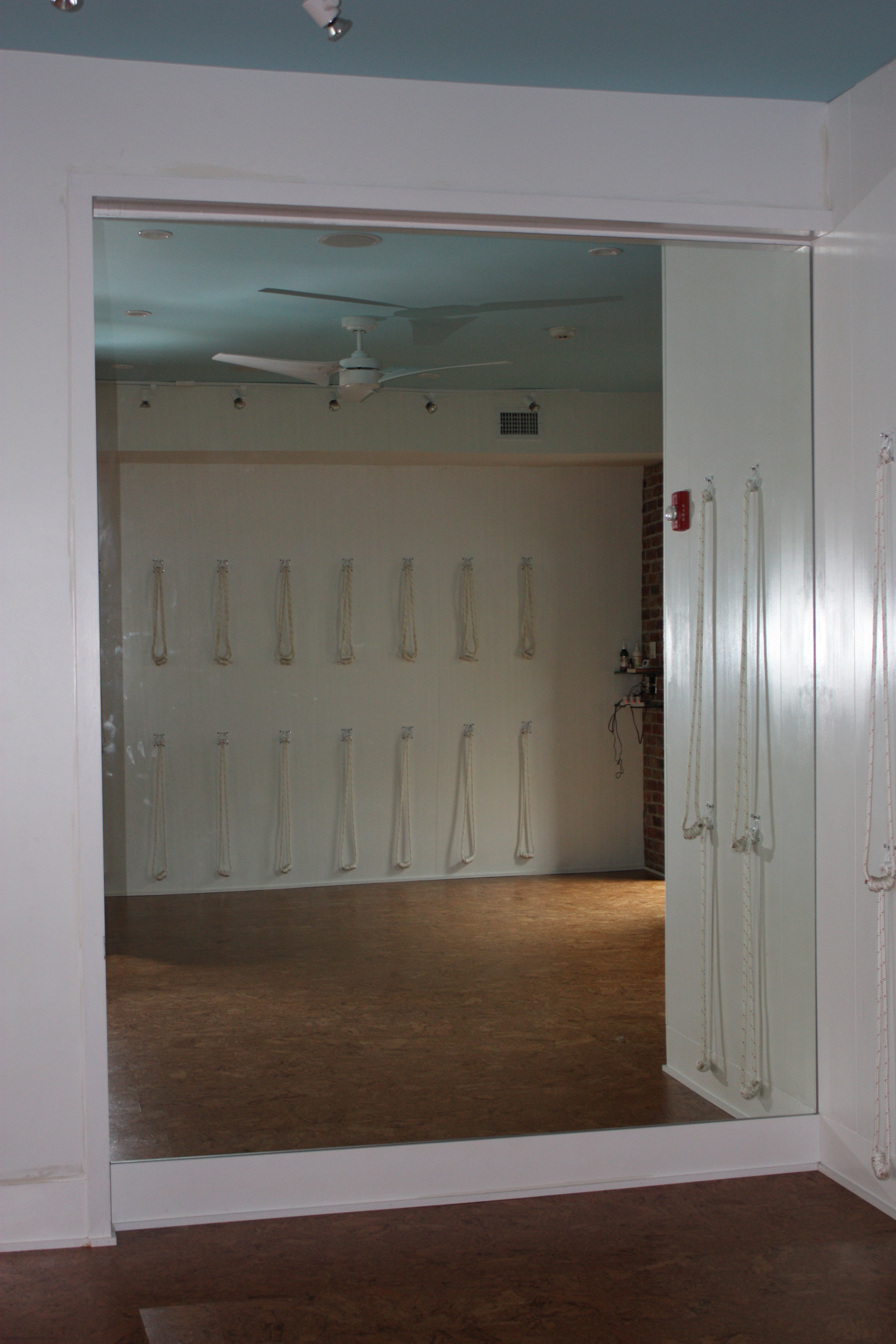
The Ballet Studio

I returned to the ballet studio eight years ago at the age of 42 following a 17-year hiatus, and one year after dispatching my daughter into ballet class.  (She wisely extricated herself from the ballet world five years later when she was 12.)    My first plié felt like no time had passed.  Tears gently oozed with the familiar music as my body felt the emotion and the memory of my dancing. 

And then there was the mirror.  My familiar companion.  Judgment.

Not bad for 42.  Me in a leotard.  And a skirt to disguise the hips and belly.

But I could look better.  BE better.

I was sucked into the obsession.  Immediately. 

  • Where should I stand at the barre to get the best view (of me)?
  • Do I look thinner today?
  • Am I thinner than her?
  • Is my stomach flat?
  • How high is my leg in developpé?
  • Is it higher than hers?
  • Is the teacher watching me?
  • Does HE like my dancing?

Wait, I am 42 and myopic.  I can barely see myself in the mirror!    And so went the next few years as I re-explored ballet from a new perspective.  Can I simply enjoy it without the ambition, without the judgment?  My muscle memory came back quickly.  I still struggled with double pirouettes and piqué turns to the left.  I still danced adagio sections in the center beautifully, maybe more beautifully with years of living coloring my dancing.  And I loved jumping!  Flying through the air.  Joy!  As I strained to revisit my ballerina dreams in this weekly Saturday adult class filled with other beautiful and accomplished “mature” dancers, I nursed agonizing muscle cramps every Saturday evening and my chronic stiff neck. 

I was obsessed.  I lost weight.  A new ballerina friend remarked enthusiastically a year later – “Oh! You have your ballet body back!”  My ballerina body.  Thin.  In pain.  Grasping at those double pirouettes.  Crying with joy at every plié and grand jeté.  Trying to explain to my husband why I did this every Saturday even though it led to excruciating night cramps where I yelped around on one leg.  I thought I loved it.  But my body told me otherwise.  I stopped.  Yes, it was different at 42 than at 14, but the memories stored in my body were still there and would not let me embody the joy of dance without the pain.

The Yoga Studio 

And then I walked into the yoga studio.  There were no mirrors, no judgment, no right and wrong.  I closed my eyes.  I breathed.  I felt my body.  I felt safe.  At peace (at least sometimes).  Don’t get me wrong.  I still judged myself.  I still compared myself to everyone.  Ha!  I can touch my head to my knee and she can’t!  Look at me doing headstand at the wall!  Uh oh, look at her doing headstand without the wall!  I slowly have begun to absorb the truth:  there is no perfect pose to achieve.  Gradually, there are more moments of peace and fewer moments of judgment.  Fewer moments of obsessive chasing after the perfect chaturanga … And, with my neck, I have sworn off headstand (for now).  But I am thrilled with handstand.  (Thank you Jill.  I hear your voice every time I go flying up through the air, heels over head, to become upside down.)

I was surprised when I saw the mirror in the new studio.  I felt betrayed.  How could you put a mirror in the yoga studio?  Intellectually, I get it.  The mirror is a good teaching tool.  It provides good feedback.  You’re not getting the shape of Trikonasana?  Let’s go over to the mirror and find it.  You can’t see your back body?  Let’s go over to the mirror and find it.  Angry at the mirror, I purposefully arrived early at classes so that I could find my own space, aggressively away from the mirror.  For me, the point of yoga was to feel the poses and my body in the poses and get away from “right” and “wrong.”  I love to close my eyes and remove the onslaught of visual stimuli and move inside.   Hide inside.

Proprioception is your ability to know where your body is in space.  It is a crucial “6th” sense and vitally important for balance and increasingly valuable as we get older.  Dancers have tremendous body discipline but can be reliant on the mirror for feedback.  When dancers move from the mirrored studio to the mirrorless stage, they can be disoriented, unable to perform if they are not performing for the mirror.  Yogis tune in to their bodies, developing nuanced body awareness, balance, strength and flexibility – learning to distinguish between up and down even when they are upside down and without a mirror. 

One amazing use of the mirror took place in a Feldenkrais workshop offered at Yoga Haven led by Kim Plumridge several years ago.  She gave us all a hand mirror and asked us to look at our faces.   Indeed, she commanded us to REALLY LOOK AT OUR FACES. 

  • Notice the asymmetry of each half of your face. 
  • What color are your eyes? 
  • What is the color and texture of your skin?
  • How deep are your dark circles? 
  • What happens when you smile?  Enjoy how you feel when you smile. 
  • Look into your own eyes and see your Self.  Honor your Self. 
  • Like what you see in the mirror. 

Astonishing!  The mirror transcends self-absorption and facilitates self-acceptance, allowing the heart and soul to shine out with love for me … and for you.  Perhaps it is time to open my eyes and make peace with the mirror in the studio, and my Self.  Namaste.

Resilience

Resilience

“Resilience,”  she said.

Or lack of.  That is the word that came to her mind when I described my latest bout of overwhelming anxiety, my sadness at the passing of time, and the impact of my emotional and indecisive swirl on the people I love.  My life is so good right now and yet my mind succumbed to negativity.  Why can’t I sustain happiness?  I am plugging away at my writing.  I am plugging away at teaching my yoga.  I am plugging away at nurturing new projects at work.  I am plugging away at my tennis serve and my downward dog.  I am plugging away at living my life with more meaning, compassion, and happiness.  Ho hum, plugging away.  Boring.

AHA!

You see – My ego thinks that I am beautiful, smart, perfect, special.  I should be doing something GREAT by now.  What pressure!  Clearly, I am a fraud and a failure.  What beauty I have has banged into middle age.  (Who is that woman with the wrinkly neck in the mirror?)  I am smart, whatever that means.  (I have a good education and I take tests well.)  But being smart is no guarantee of success and there are many people who are smarter than me.  I have never been perfect and I am tired of trying.  And, I am no more special and no less special than you.  Wow, what a relief.  I don’t have to hide my self any more.  (If only I believed this at my core.)

Resilience is not discipline.  I am disciplined.  I am not resilient.  Yet. 

Discipline is getting up every day and plugging away at making progress.  It is crucial to achievement.  It can be somewhat routine and automatic.  David Brooks succinctly summarized recent research stating that it takes 10,000 hours of disciplined practice to become great at an activity. 

Resilience is more about flexibility and attitude.  It is defined as the ability to bounce back from defeat.  Resilient people see failure as productive feedback, not a setback.  Resilient people are optimists.  Not me.  I respond to setbacks through the lens of PTSD.  I see failure as trauma, severe and tragic.  I want to quit, not fight.  I feel scolded, shamed, embarrassed.  I want to hide.  I am angry at not being appreciated, but I don’t know how to deal with my anger.  As I toil away, alone, perfecting a project, someone who is less perfect but more out there with her self and her productivity leapfrogs ahead of me.  Hmm.  Maybe it is time to learn, change, and move forward.

Resilience is mindful.  It is pausing with self-reflection and making a conscious decision about how to move forward.  Yes, it means plugging away, but not in an automatic way.  And it’s definitely not boring.  It means changing course if necessary.  Keep getting up and getting out there with eye contact and a smile and genuine connection.  Other people don’t know what you are going through.  They are more concerned with what they are going through.  Forget about waiting for perfection and just put something out there.  It’s better than you think.

Daughters and Fathers

Ah, Sunday morning with coffee and the New York Times.  I do love the serendipity of flipping through the newspaper and finding something unexpected that I want to read.  Long live print.

This past Sunday August 12th, the Modern Love column was written by Lucy Schulte Danziger, editor of Self.  She wrote a reflection on the passing of her father. 

I know Lucy, though not well, through our shared work history at now defunct Women’s Sports and Fitness magazine.  Lucy embodies many traits that I admire and don’t always feel I have.  She is confident, extroverted, energetic, and outspoken.  She is a writer and editor.  She is an athlete and a health & fitness expert.  She is at the top of her game.  I am developing those traits in myself, but they are new and fragile.  I tend to cede control to those who are more dominant and forceful, like Lucy.  More to the point, I am reevaluating my relationship with my aging father and am hoping to say what I want to say to him before he dies.  So, with that context, I was highly interested in reading what she had to say. 

My first reaction was anger and judgment:  Easy for her to feel love instead of debilitating grief: clearly she had a wonderfully loving relationship with her father who adored her.  Easy for her to feel love instead of debilitating grief: with her comfortable life, filled with a vacation home, affluence, and opportunities.  She is out of touch with the rest of us who have complicated relationships with our fathers, less money and opportunities, and are caring for aging parents in various stages of prolonged illness and wondering when it will be over. 

Whoa!  Wait a minute!  Let me reread what she wrote. 

Her father was a brilliant and celebrated leader in the book publishing industry.  What kind of pressure might that have been on his daughter – herself a high-achiever in the world of athletics and publishing?  My radar is up.  I can only speculate.  A triathlete, eager to compete and win?  A successful media executive, eager to compete and win?  Well, whatever issues they may have had, it seems they aired them and resolved them instead of letting them simmer unsaid.  Kudos to both of them. 

What can I learn from her without diminishing my own traits, talents, and successes?  How can I be pleased for her without feeling bad about myself? 

So, upon rereading and reflection, I have landed on a different interpretation.  We are all on our unique path, with different parents and different experiences shaping us.  We all struggle.  Maybe I am envious of her success and her graceful coping with death.  But I am not angry with her and no longer judge her.  In fact, I agree with her.  Her father is supremely lucky to have died doing something he loved.  And Lucy is supremely lucky to feel his love.  Instead of being angry, I offer my letter of appreciation:

Dear Lucy,

Thank you for sharing the story of your father’s death. 

It takes courage to express a point of view that seems to go against social norms – your experience of his dying seems bathed in love not grief.  I imagine, from what you’ve said, that while your father was demanding, he was also demonstratively loving and proud of you.  You have a confident, extroverted, energetic, no-nonsense personality.  His love and pride in you is apparent.  Sigh, I am jealous.  I am still sorting through the good and the bad of my father and how the complexity of our relationship has shaped me and my personality.   And perhaps that is why many of us experience so many complicated and negative emotions when a parent dies.  We feel forlorn – parentless and alone.  We feel frustrated at all the unresolved anger.  We feel guilty for feeling angry and for feeling relieved that they are dead.  We feel sad that they are gone.  We truly miss them and the shared personality traits and the shared memories.  We are afraid of aging and of dying.  I cannot think of a better gift than to parent a child so that they feel profound love when you are gone.  May I give my children that gift.  (And may we all die quickly and painlessly doing something we love – and not experience the prolonged death that so many people experience in this time.)

Thank you for sharing,

Sally